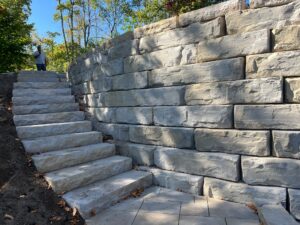
A retaining wall has an important job. It holds back soil, helps manage water, reduces erosion, and can turn a sloped property into usable outdoor space. But like any structure exposed to Northern Michigan weather, retaining walls can begin to show signs of wear or failure over time.
A small crack or slight shift may not seem urgent, but retaining wall problems can become more serious as soil pressure, drainage issues, heavy rain, and freeze-thaw cycles continue to put stress on the structure.
Knowing what to look for can help you address a problem before it leads to a larger and more expensive repair.
1. The Wall Is Leaning or Bulging
One of the clearest warning signs is a wall that no longer looks straight.
A retaining wall may begin leaning outward or bulging when the pressure behind it becomes greater than the wall was designed to handle. Poor drainage, saturated soil, inadequate construction, or movement in the ground can all contribute to the problem.
A noticeably leaning wall should be evaluated sooner rather than later. Once a wall begins moving, the problem may continue to worsen.
2. Cracks Are Developing
Not every small crack means a retaining wall is failing, but new, expanding, or significant cracks deserve attention.
Cracking can indicate movement within the wall or the soil supporting it. Look for cracks that continue to grow, appear in multiple areas, or are accompanied by leaning, bulging, or separation.
The location and pattern of the cracking can help determine whether a repair may be possible or whether a larger structural issue needs to be addressed.
3. Blocks or Stones Are Separating
Gaps between blocks, stones, or other wall materials are another sign that the structure may be shifting.
As soil moves or pressure builds behind the wall, individual sections can begin separating. This can affect both the appearance and stability of the wall.
If the gaps continue getting larger, it's important to determine what is causing the movement rather than simply filling them in.
4. Water Is Collecting Around the Wall
Water management is a major part of retaining wall performance.
When water cannot properly drain from behind a retaining wall, pressure can build against the structure. Over time, that additional force can cause bowing, cracking, shifting, or even wall failure.
Watch for standing water, consistently soggy soil, water flowing over or through unexpected areas of the wall, or erosion near the base.
Correcting the drainage problem may be just as important as repairing the wall itself.
5. Soil Is Washing Away
A retaining wall should help stabilize the surrounding landscape. If you're noticing soil washing out from behind, underneath, or around the ends of the wall, something isn't working as intended.
Erosion can gradually remove the support a retaining wall depends on, leaving sections vulnerable to settling or movement.
In Northern Michigan, heavy rain, snowmelt, and changing ground conditions can make erosion particularly important to monitor.
6. The Wall Is Sinking or Uneven
A retaining wall needs a properly prepared and stable base.
If one portion begins sinking while another stays in place, the wall may look uneven or develop a stair-step appearance. This can happen because of inadequate base preparation, soil settlement, erosion, or drainage problems.
Once the base begins moving, repairing only the visible portion of the wall may not solve the underlying problem.
Should You Repair or Replace Your Retaining Wall?
The answer depends on what is causing the problem and how far it has progressed.
A localized issue may sometimes be repairable, particularly when the wall is otherwise structurally sound. More extensive movement, significant leaning, widespread cracking, poor drainage, or an inadequate foundation may make rebuilding the wall the better long-term option.
The key is identifying the cause before deciding on the solution.
Simply straightening a section, replacing a few blocks, or patching a crack won't provide a lasting fix if water pressure, erosion, or unstable soil continues to affect the wall.
Don't Ignore the Area Around the Wall
When evaluating a retaining wall, it's important to look beyond the wall itself.
Changes elsewhere on your property can provide valuable clues. Pay attention to new drainage patterns, washed-out landscaping, sinking patios or walkways, unusually wet areas, or changes to the slope above the wall.
These issues can all be connected.
A professional evaluation should consider the wall, drainage, grading, soil conditions, and surrounding landscape to determine why the problem is occurring and how to address it properly.
Retaining Wall Solutions for Northern Michigan Properties
Northern Michigan properties present unique challenges, from sloped terrain and changing soil conditions to heavy rain, snow, and repeated freeze-thaw cycles. A retaining wall needs to be designed and built with those conditions in mind.
DFR Services provides retaining wall construction and repair solutions designed to improve structural stability, manage erosion, and complement the surrounding property.
If your retaining wall is leaning, cracking, separating, or showing other signs of movement, don't wait for the problem to become more severe.
Contact DFR Services to have your retaining wall evaluated and determine the right solution for your property.